Localization Testing Services
Make sure your product doesn't just translate — it actually works in every market you ship to. I test translated UI layouts, text expansion, date/time and currency formats, RTL support, locale-specific functionality, and cross-device behavior across every locale you support.
- Functional & layout QA across every locale
- Text expansion, RTL, and format checks
- Optional native-speaker linguistic review
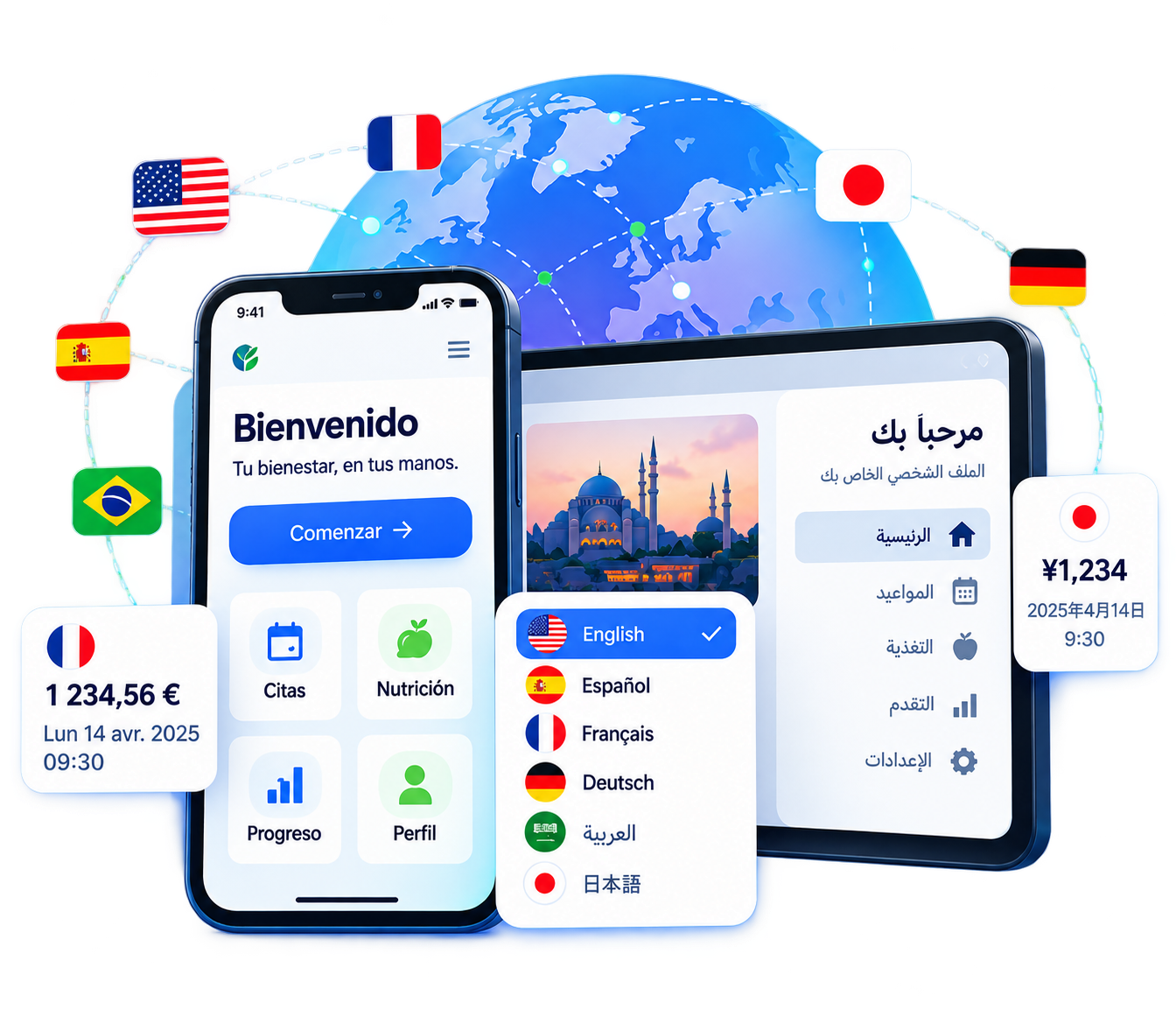
Multilingual QA
Localization testing, not just translation review
Shipping a translated build isn't the same as shipping a build that works in that locale. Layouts break under longer German or French strings, dates and currency read wrong, forms reject valid local phone numbers and postal codes, and right-to-left languages mirror incorrectly. Testing2GO runs the functional, layout, and format QA pass your release needs before it reaches users in a new market.
This is quality assurance, not linguistic translation. I verify that each locale behaves correctly — the layout holds, the data formats are right, the flows work end to end. If you also need native-speaker validation that the translation itself reads naturally, that's coordinated as an optional add-on, with Testing2GO managing the process end-to-end.
- Functional & layout QAEvery locale build tested against layout breakage, text overflow, truncation, and broken UI.
- Format & regional accuracyDates, numbers, currency, addresses, and phone/postal formats validated per locale.
- Full regressionConfirms that switching locales doesn't break existing functionality.
Real device & browser coverage
Locale builds verified across real desktop browsers, iOS, and Android devices.
Format & regional accuracy
Dates, numbers, currency, addresses, and locale-specific validation checked against each market's conventions.
RTL & layout integrity
Right-to-left languages, text expansion, and responsive layouts verified across every screen.
Managed native linguistic review
Need a native speaker to confirm the translation reads naturally? I manage that too — test plan, coordination, validation, one report.
Test Plan
Localization test plan — what we test
A representative sample of the checks included in every localization QA pass. Exact scope depends on your supported locales, platforms, and release.
| Area | What You Test |
|---|---|
| Language Coverage | App/site loads the correct language for each supported locale. |
| Untranslated Content | English/source-language strings aren't accidentally left behind. |
| Text Expansion | German/French/etc. longer text doesn't overflow, truncate, overlap, or break layouts. |
| Navigation & UI | Buttons, menus, modals, forms, tabs, and headers remain usable. |
| Dates & Times | MM/DD/YYYY vs DD/MM/YYYY, 12/24-hour clocks, time zones. |
| Numbers | 1,000.50 vs 1.000,50, decimal/thousand separators. |
| Currency | $, €, £ — local formatting and currency placement. |
| Forms | Addresses, phone numbers, postal codes, and names — validation supports the locale. |
| Images/Content | No inappropriate hard-coded English text in graphics; localized assets display correctly. |
| RTL | Arabic/Hebrew layouts correctly mirror where applicable. |
| Functional Flows | Signup, login, checkout, profile, search, messaging, etc. work under each locale. |
| Mobile/Responsive | Localization works across iOS/Android, screen sizes, and orientations. |
| Accessibility | Screen-reader labels and localized accessible names are correct; language attributes are set appropriately. |
| Notifications/Email | Push notifications, SMS, and emails use the appropriate language/locale. |
| Regression | Changing locale doesn't break existing functionality. |
How It Works
Localization QA process
Scope & setup
- Confirm supported locales, regions, and platforms
- Decide whether native linguistic review is in scope
Testing execution
- Functional, layout, and format QA per locale
- Full regression across real browsers, iOS, and Android
Linguistic review — optional
- Native-speaker testers coordinated and managed
- Findings reproduced, validated, and folded into one report
What You Get
Localization test report
The key sections included in every localization QA report.
Test summary
Locale count, issue count, and headline findings.
Locale-by-locale findings
Detailed results with screenshots for each supported language and region.
Layout & text-expansion issues
Overflow, truncation, and broken UI documented per locale.
Format & regional findings
Date, number, currency, address, and phone/postal issues.
Functional flow results
Signup, checkout, search, messaging, and other key flows per locale.
Regression results
Confirmation that switching locales doesn't break existing functionality.
RTL & accessibility notes
Right-to-left layout integrity and localized accessible names.
Linguistic review findings
Native-speaker feedback, when included in scope.
Scope & limitations
What was covered and any constraints that shaped the results.
International Release
Pair it with accessibility & mobile QA
Localization, accessibility, and mobile QA share the same real-device and cross-browser coverage — combining them gives you one coordinated check before an international release.
Accessibility Testing
WCAG 2.2 conformance across every locale your product ships to, plus VPAT / ACR documentation for procurement.
Learn MoreMobile App Testing
iOS and Android coverage for every language and region you support, on real devices.
Learn MoreInternational Release Package
Combine localization, accessibility, and mobile QA into one coordinated release check.
Book a CallFAQ
Localization testing — FAQs
What is localization testing?
It verifies that a translated web or mobile build actually works correctly in each target market: layouts hold under longer or shorter text, dates, numbers, and currency display in the local format, forms accept local addresses and phone numbers, and every user flow still functions. It's functional and layout QA, run per locale.
Is localization testing the same as translation?
No. Localization testing is quality assurance — confirming a translated build behaves correctly. Translation quality itself, such as whether phrasing sounds natural to a native speaker, is a separate linguistic review. I handle the QA directly and can coordinate native-speaker linguistic review as an optional add-on.
Do you provide native-speaker linguistic review?
Yes, as a managed add-on. I write the test plan, coordinate native-language testers, reproduce and validate their findings, and deliver one consolidated report alongside the functional and layout QA results.
What's the difference between localization (L10n) and internationalization (i18n) testing?
Internationalization testing checks whether the underlying product architecture can support multiple locales at all, such as Unicode handling and externalized strings. Localization testing checks a specific, translated build against a specific locale's language, layout, formats, and functionality.
Which locales and platforms can you test?
Testing covers web and mobile (iOS and Android) across the locales your product supports, including right-to-left languages such as Arabic and Hebrew. Scope, device coverage, and locale count are agreed during discovery.
Can this be combined with accessibility or mobile QA?
Yes. Localization, accessibility, and mobile QA are frequently combined into a single international release check, since they share the same real-device and cross-browser test coverage.
Let's get your product ready for every market.
Wrong date formats, broken layouts, and untranslated strings undermine an otherwise solid release. Tell me about your supported locales and I'll help you ship with confidence.
Contact Us